Gypsum Processing Line
Gypsum Powder Production Line
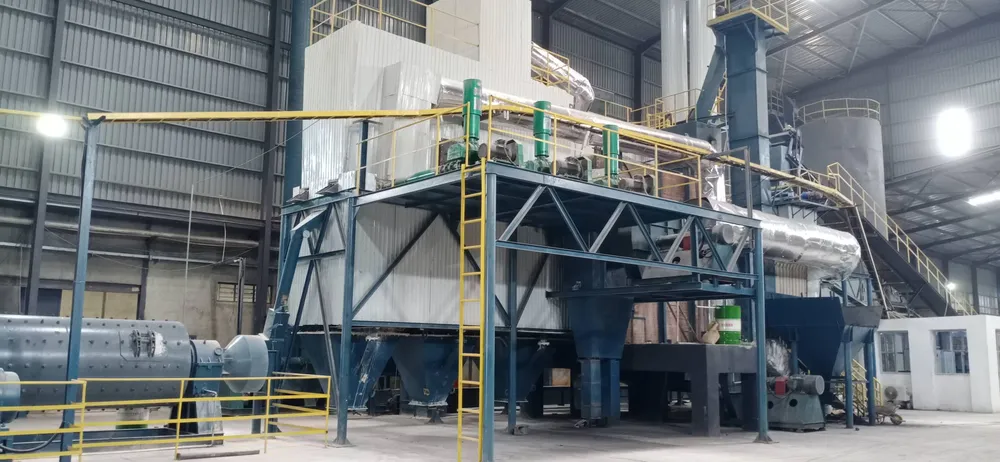
A full-process natural or chemical gypsum powder line covering crushing, drying, calcination, grinding, storage, packing, waste-heat recovery, and IoT-enabled operating support.
Key Features
Compatible with natural gypsum, FGD gypsum, and phosphogypsum
Vertical boiling furnace, hot-air boiling furnace, or rotary kiln process options
Hammer dryer and hot-air calcination options for chemical gypsum
IoT modules can synchronize production line flowcharts for remote troubleshooting
Heating system can be matched to fuel calorific value to reduce energy costs by more than 30%
Negative-pressure process design supports cleaner, lower-dust workshop operation
Waste heat recovery enables secondary heat utilization
Technical Parameters
Annual capacity
15,000-500,000 tons
Working time
24 h/day, 300 days/year
Finished powder fineness
Up to 220 mesh
Raw materials
Natural gypsum ore, FGD gypsum, phosphogypsum
Calcination process
Vertical boiling furnace, hot-air boiling furnace, or rotary kiln
Fuel
Natural gas, coal, diesel, heavy oil, light oil, etc.
Packing
1-2 spout packing machine, rotary packing machine, or 1-ton bulk bag packing machine
Finished powder strength
Bending >=2.7 MPa, compressive >=5 MPa
Delivery period
90-150 days
Process Flow
01
Crushing
02
Grinding
03
Calcination
04
Packaging
Main Systems
Natural Gypsum Process
Material feeding, crushing, grinding, rotary kiln or boiling furnace calcination, and storage.
Chemical Gypsum Process
Phosphogypsum or FGD gypsum drying, hot-air calcination, grinding, and storage.
Energy & Emission Design
Waste heat recovery, negative pressure operation, dust collection, and optional centralized soundproof room.
Service & Monitoring
IoT remote response, commissioning and process engineer support, and project inspection visits.
Engineering Advantages
Continuous, stable production with soft starters and coordinated controls
Stable product quality through hot-air boiling furnace and cooling technology
Energy-saving design using fuel-based heating calculation and waste heat recovery
Delivery checks designed to reduce missing parts and installation delays